
Fuel Solutions for Data Centers & Critical Infrastructure
In today’s world, a short power cut in a server room means a lot more than just dark rooms; data is lost, world trade is disrupted, and security is endangered. Although an uninterruptible power supply (UPS) can give a data center a short ‘breath of life’ during power cuts, the long-term survival of the facility is wholly dependent on the reliability of its fuel solutions for data centers.
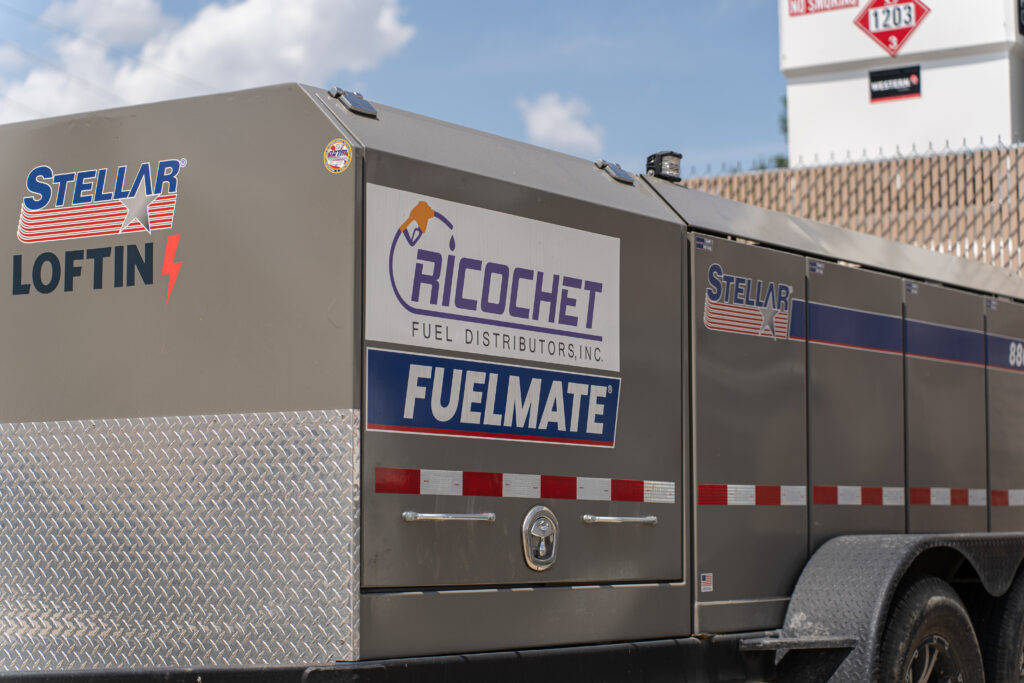
For facility managers, the “N+1” or “2N” redundancy standard needs to be addressed both physically and energy-wise: first, the hardware, and second, the very energy source that keeps the lights on. At Ricochet Fuel, we are focused on the logistics precision needed to maintain a critical infrastructure fuel supply, thus making sure that even when the power is out, your mission-critical operations continue as normal.
Designing Robust Data Center Fuel Systems
What makes a facility able to withstand a lot of stress and be resistant to danger is mainly the logic of its on-site storage and delivery. A data center fuel systems architecture is an intricate network that needs to be constantly supervised and uses high-quality filtration to keep the fuel from deteriorating.
The Significance of Diesel Fuel for Data Centers
Diesel fuel for data centers has been the industry standard for standby backup electricity in the case of a utility power outage. Since diesel is very energy-dense and can provide instantaneous torque to a large generator, it is the main emergency fuel supply for highly mission-critical operations.
But the presence of the tank by itself is not enough; you need a partner who can understand the requirements of generator fuel storage and local environmental regulations.
Achieving Fuel Redundancy for Data Centers
Keeping the facility running in any circumstance can be ensured by achieving fuel redundancy for data centers, which involves having more than one method of supply and storing power on-site. This can be broken down into:
- Primary Storage: The first choice would be the main belly tanks or an external bulk storage.
- Day Tanks: Smaller units that can be directly fed to the engines.
- Secondary Supply Contracts: Receiving a guaranteed priority during regional disasters.
Emergency Fuel Supply and Disaster Planning
When a crisis unfolds, the need for fuel goes up in every sector. If you do not have an emergency fuel supply contract, the open market during a time of shortage will decide your facility’s fate.
Data Center Backup Fuel Planning
Any emergency generator plan should be able to describe in detail the data center backup fuel planning. To that end, it is necessary to measure burn rates under full load and set ‘trigger points’ for replenishment. During major weather events, bulk furl hurricane preparedness can mean the difference between running continuously or a total dark site situation.
Reliable Fuel Supply for Critical Infrastructure
In addition to the server room, making sure hospitals and telecommunications hubs are provided with a reliable fuel supply for critical infrastructure necessitates a special vehicle fleet. Our emergency response bulk fuel services are equipped to negotiate disaster areas and reach the facilities that have to remain operational at all times.
Fuel Resilience Strategies for Data Centers
Facility managers nowadays are increasingly adopting fuel resilience strategies for data centers that are more anticipatory.
- Fuel Quality Testing: Consistent sampling to avoid microbial growth and oxidation.
- Propane Integration: Understanding different propane uses for secondary heating or smaller backup systems.
- Vendor Vetting: Strict propane supplier selection and diesel delivery auditing to maintain quality.
- Efficiency: Reviewing construction efficiency posts to optimize site fueling access.
Conclusion
Your data center is central to your business operations, and the supply of fuel to the backup generators is what keeps that infrastructure running. Ricochet Fuel is not just a supplier, we provide for your mission-critical needs and the comfort of knowing that your facility will not be down for even a second. Our experts can help if you are in the design stage or want to audit your current fuel solutions for data centers.
Don’t wait for the next storm to find out if your business is prepared. Contact Ricochet Fuel today and let us help you establish a dependable fuel supply for your critical infrastructure so that your data center stays online regardless of the grid!
FAQs
Why is diesel the main generator fuel for data centers?
Generator fuel for data centers must be both shelf-stable and capable of handling sudden, heavy loads. To operate a complete data center, massive Tier III and Tier IV engines need a diesel energy source that is both reliable and powerful.
What backup fuel systems are the most effective for remote sites?
The best backup fuel systems make use of on-site, large-scale fuel storage combined with remote monitoring. As a result, automated ‘low fuel’ alerts can be used for priority dispatch.
How frequently should I conduct diesel fuel testing for data centers?
Testing should be done at least twice annually. Premium fuel solutions for data centers always integrate a fuel conditioner and a test schedule to prevent engine clogging in the event of an emergency.
What is the most severe hazard for a critical infrastructure fuel supply?
The main threat is contamination, while logistical ‘bottlenecks’ during disasters are secondary threats. A partner with a nationwide network ensures your critical infrastructure fuel supply is not compromised by a single local terminal.
Modern engines are engineered with extreme precision. High-pressure fuel systems, electronic injectors, emission controls, everything depends on…
It is already quite difficult to manage a single fleet, but when your fleet operates in different states, the regulatory burden increases…