
Tank Placement Mistakes That Increase Theft & Downtime
You don’t usually notice tank placement right away. Everything works, fuel is there, machines run. Then small delays take place; refueling takes longer, operators wait, and numbers don’t match up.
That’s how tank placement mistakes show up. Over time, they hit where it hurts most: productivity, fuel loss, and unnecessary downtime.
The tricky part is that most of these issues aren’t caused by the tank itself. It’s where it sits, how it’s accessed, and whether anyone thought through the setup. Fixing that comes down to applying the right fuel tank placement best practices before problems snowball.
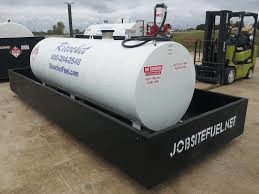
Why Tank Placement Matters More Than You Think
Tank placement isn’t just a logistical decision. It’s operational. A poorly planned on-site fuel tank placement can quietly slow everything down. Equipment travels farther than it should, refueling interrupts workflows instead of fitting into them, and deliveries become harder than they need to be.
Then there’s safety. Ignoring basic fuel tank positioning guidelines can put tanks too close to hazards or on surfaces that don’t hold up over time. Also, when tanks aren’t easy to see or monitor, accountability drops.
Following proper fuel storage placement guidelines keeps things predictable, efficient, and easier to manage day to day. If you’re already relying on services like bulk fuel delivery or on-site fueling, placement either makes those services seamless or slows them down.
Common Fuel Tank Placement Mistakes that Cost You
1. Placing Tanks Too Far from Equipment
When tanks are positioned too far out, every refueling trip takes longer. Machines sit idle. Operators lose time in small increments that add up quickly. A practical on-site fuel tank setup keeps tanks within a reasonable distance. Not right next to everything, but not across the site either. Just enough to reduce unnecessary movement.
2. Poor Visibility and Security Positioning
If you can’t see it, you can’t control it. Tanks placed in low-visibility areas often lead to unnoticed usage or worse, theft. This kind of improper fuel tank placement makes monitoring difficult.
Simple fuel tank positioning guidelines already solve this. Keep tanks visible. Place them where there’s regular activity. Make access easy to observe. For more structured setups, on-site tank solutions can help align placement with both security and efficiency.
3. Ignoring Ground Stability and Drainage
A lot of concrete tank placement mistakes happen because the ground wasn’t properly prepared. Uneven surfaces, soft soil, or poor drainage eventually cause instability. You start seeing tilting, stress on the tank, and in some cases, leaks.
Proper fuel storage placement guidelines always prioritize stable, level ground. For long-term on-site fuel tank placement, this becomes non-negotiable.
4. Overlooking Compliance and Safety Distances
Ignoring required distances from buildings or ignition sources is one of the more serious mistakes. It can lead to safety hazards and compliance issues that aren’t easy to fix later.
Following fuel tank placement best practices ensures your setup meets regulations and reduces exposure to unnecessary risk. If there’s any doubt, working with experts through fuel management services helps get it right from the start.
5. Poor Access for Refueling Vehicles
The tank might be perfectly placed for equipment, but what about delivery trucks? If access is tight or blocked, refueling slows down. A well-thought-out on-site fuel tank setup considers both usage and delivery.
Good on-site fuel tank placement allows:
- Clear access routes for trucks
- Enough room to maneuver safely
- Smooth entry and exit without delays
This becomes especially important if you rely on mobile fueling services.
Tank Placement Mistakes Beyond Fuel: Water & Concrete Tanks
The same issues show up outside fuel systems, too. Water tank placement mistakes often lead to inefficient flow or pressure problems. Usually, because placement didn’t match actual usage needs.
Then there are concrete tank placement mistakes, which tend to be structural. Weak foundations, poor leveling, and improper support all lead to long-term damage.
Fuel Tank Placement Best Practices That Actually Work
Strong fuel tank placement best practices usually come down to:
- Keeping tanks close enough to reduce travel time
- Ensuring visibility for monitoring and control
- Using stable ground with proper drainage
- Maintaining required safety distances
- Allowing easy access for delivery and refueling
When these are done right, your setup starts working with you instead of slowing you down. Pair that with reliable on-site tank solutions, and the difference shows up quickly in daily operations.
Final Thoughts: Fix Placement Before It Costs You
Most mistakes don’t feel urgent when they happen. That’s why they stay unnoticed. But over time, they start affecting everything. Fixing placement isn’t about overhauling your entire setup. It’s about making smarter decisions, where the tank sits, how it’s accessed, and how visible it is.
With the right on-site fuel tank placement, things run smoother. If something feels off in your current setup, it’s worth taking a closer look or exploring better options through on-site tank solutions. Because small changes in placement can make a bigger difference than most teams expect.
FAQs
1. Why are tanks always placed at height?
Tanks are sometimes elevated to allow gravity-fed fuel flow, reducing the need for pumps. Even then, placement must follow fuel tank positioning guidelines for safety.
2. Does an expansion tank need to be upside down?
No. Most expansion tanks are installed upright unless specified otherwise. Installation depends on system requirements, not a fixed rule.
3. Where should a fuel tank be placed?
A fuel tank should be on stable ground, in a visible location, and close enough for efficient use. Following fuel storage placement guidelines ensures proper setup.
4. Where not to put propane tank?
Avoid placing propane tanks near ignition sources, enclosed areas, or unstable ground. They should also be kept away from unprotected high-traffic zones.
5. What are the biggest on-site fuel tank placement risks in the USA?
The main risks include theft due to poor visibility, non-compliance with safety standards, and unstable placement conditions. Following fuel tank placement best practices helps reduce these risks.
6. How can improper fuel tank placement increase downtime?
Improper fuel tank placement leads to longer refueling times, delayed deliveries, and inefficient workflows, all of which increase downtime.
A hurricane or major storm can disrupt fuel deliveries, power, transportation, and even the normal day-to-day operations of a business. For companies…

Construction work does not always stop because of a major equipment problem. Sometimes, it is something as simple as running out of fuel at the wrong…