
How Remote Tank Monitoring Helps Prevent Fuel Shortages
Most fuel shortages aren’t really about supply. They’re about nobody noticing a tank was low until it was already empty. Remote tank monitoring fixes that blind spot by tracking fuel levels in real time, so a business gets a warning days out instead of finding out the hard way, when a generator stalls or a truck won’t start. Fuel shortage solutions used to mean somebody’s best guess at consumption rates, or hoping a driver happened to notice a gauge running low on a routine check.
That’s not really a plan; it’s a hope. Here’s what it looks like in practice, what it tends to cost, and how remote tank monitoring services fit into a business that genuinely can’t afford to run dry.
What Is a Remote Tank Monitoring System
A remote tank monitoring system is just a sensor, mounted on or in a fuel tank, measuring levels continuously and sending that data somewhere a person can actually look at it. A dashboard, an app, whatever. The point is, nobody has to walk out and eyeball a gauge anymore.
How the Technology Actually Works
Sensors read fuel levels using ultrasonic, float, or pressure-based tech depending on the setup, then send readings over cellular or satellite networks. A fuel tank monitoring system built this way just keeps updating on its own. What shows up on the dashboard is what’s actually in the tank right now, not someone’s memory of what it looked like last week.
Remote Tank Level Monitoring for Multiple Sites
If you’re running several locations, construction sites, farms, or a stack of backup generators, this is where remote tank level monitoring earns its keep. Instead of calling around to five different site managers asking “how’s the tank looking,” it’s all on one screen. Worth pairing with generator refueling services too, if backup power is part of the picture.
Remote Propane Tank Monitor Options for Different Industries
Propane runs a little differently than diesel or gasoline. A remote propane tank monitor keeps tabs on residential, agricultural, or commercial tanks and flags things before they get critically low, which matters most in winter, when propane demand spikes hard and delivery windows get tight fast.
Why Propane Monitoring Matters More in Peak Season
Propane suppliers get slammed the moment a cold snap hits, and running out then just means getting in line behind everyone else who also waited too long. A monitor that flags a tank at 30 percent instead of waiting until it hits 10 gives a business real breathing room to book a delivery before the rush even starts.
Remote Fuel Tank Monitoring and Fuel Shortage Solutions
Where remote fuel tank monitoring actually earns its cost is when supply gets tight; a storm rolls through, a region runs short, demand spikes out of nowhere. Businesses working off live data can act on what’s actually happening instead of finding out after the tank’s already dry.
Preventing Downtime Before It Happens
Once a fuel monitoring system flags a tank trending toward empty, there’s time to schedule a delivery days ahead instead of scrambling for a same-day emergency order. Honestly, that’s probably the single biggest fuel shortage solution out there; pair it with bulk fuel delivery and tanks rarely get anywhere near critical in the first place.
Automating Reorders with Remote Tank Level Monitoring Software
Some remote tank level monitoring software goes a step further and triggers automatic reorder alerts once a tank crosses a set threshold, hooking directly into a supplier’s dispatch system. Fewer manual checks. Fewer “oh no, we forgot” calls after the tank’s already bone dry.
Fuel Monitoring System Cost and Bulk Fuel Tank Monitoring
Cost is always the first question, and fair enough. Fuel monitoring system cost depends on how many tanks you’re covering, what kind of sensor each one needs, and whether you need cellular or satellite connectivity. Most setups pay for themselves pretty quickly once you factor in fewer emergency deliveries and less unplanned downtime.
What Affects Pricing Most
Sensor type, how complicated the install is, and the number of tanks needing coverage all shape fuel monitoring system cost. A single tank on cellular is a lot cheaper than a multi-site setup that needs satellite coverage for a few remote locations.
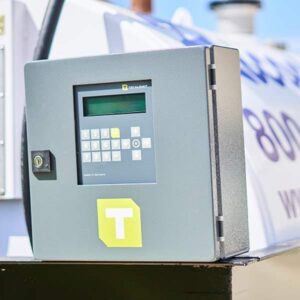
Why Bulk Fuel Tank Monitoring Pays Off for Larger Operations
For companies running large-volume tanks, bulk fuel tank monitoring tends to pay for itself fastest, because a missed alert on a high-capacity tank doesn’t just shut down one vehicle, it can shut down the whole operation. Emergency fuel delivery alongside it means a fast response the second a threshold gets crossed.
Key Takeaways
Remote tank monitoring turns fuel management from a guessing game into something you can actually plan around. Real-time visibility into every tank — one propane tank or a whole bulk fuel tank monitoring setup spread across sites — means fewer surprises and a lot less risk of running dry at the worst possible moment.
Ready to stop guessing at fuel levels? Contact Ricochet Fuel today to set up a remote tank monitoring system built around your business and get ahead of fuel shortages before they happen.
Frequently Asked Questions
1. How accurate is a remote tank monitoring system compared to manual checks?
Sensor-based systems tend to beat manual checks by a wide margin, mostly because they’re measuring continuously instead of relying on a visual glance during an occasional site visit.
2. Can a remote propane tank monitor work in areas with poor cell coverage?
Yes, a lot of systems offer satellite connectivity for rural or remote sites where cell signal isn’t reliable.
3. What is the average fuel monitoring system cost for a small business?
It comes down to tank count and sensor type, but a business with one or two tanks usually pays a lot less upfront than a multi-site operation needing wider coverage.
4. Does remote tank level monitoring work for both diesel and propane tanks?
Yes, most systems cover diesel, gasoline, and propane, though the sensor type can differ depending on the fuel and the tank material.
5. How quickly can a business get alerts before a tank runs empty?
Most systems fire off an alert once a tank crosses a set threshold, which usually gives a business several days of lead time before things actually run dry.
A hurricane or major storm can disrupt fuel deliveries, power, transportation, and even the normal day-to-day operations of a business. For companies…

Construction work does not always stop because of a major equipment problem. Sometimes, it is something as simple as running out of fuel at the wrong…