
How Businesses Decide When to Switch from Retail Fuel to Bulk Fuel?
Fuel decisions might appear as one of your daily tasks; however, they play a crucial role in ensuring the overall profitability of businesses in the long run. Moreover, for large business fleets, construction firms, industrial businesses, and, most importantly, logistic operators, choosing between bulk fuel vs. retail fuel is not only a never-ending debate for convenience but also about overall cost control and long-term operational efficiency, too.
Nonetheless, lots of businesses may end up reaching their critical tipping point earlier than expected, all thanks to a sudden rise in fuel usage demands. That’s why understanding when to switch from retail fuel to bulk fuel for businesses is the ultimate key to boosting operational efficiency and accountability among teams without compromising on the fuel budget at the last moment.
Bulk Fuel vs Retail Fuel: A Practical Comparison for Businesses
Before making a decision, businesses should understand how these fuel options typically vary in real-world operations. Therefore, here are some of the most common differences that make them so different:
Retail Fuel
It typically includes:
- Price fluctuations on a daily basis
- Retail markups as well as taxes
- Lesser productivity due to off-site fueling
- Limited visibility into fuel usage, meaning improper fuel planning
In short, for companies struggling with higher fuel demands, retail fueling usually results in potentially inconsistent expenses, along with inefficient workflows. Get more details about retail vs. bulk fuel to make a wise decision that is undoubtedly worth your hard-earned money.
Bulk Fuel
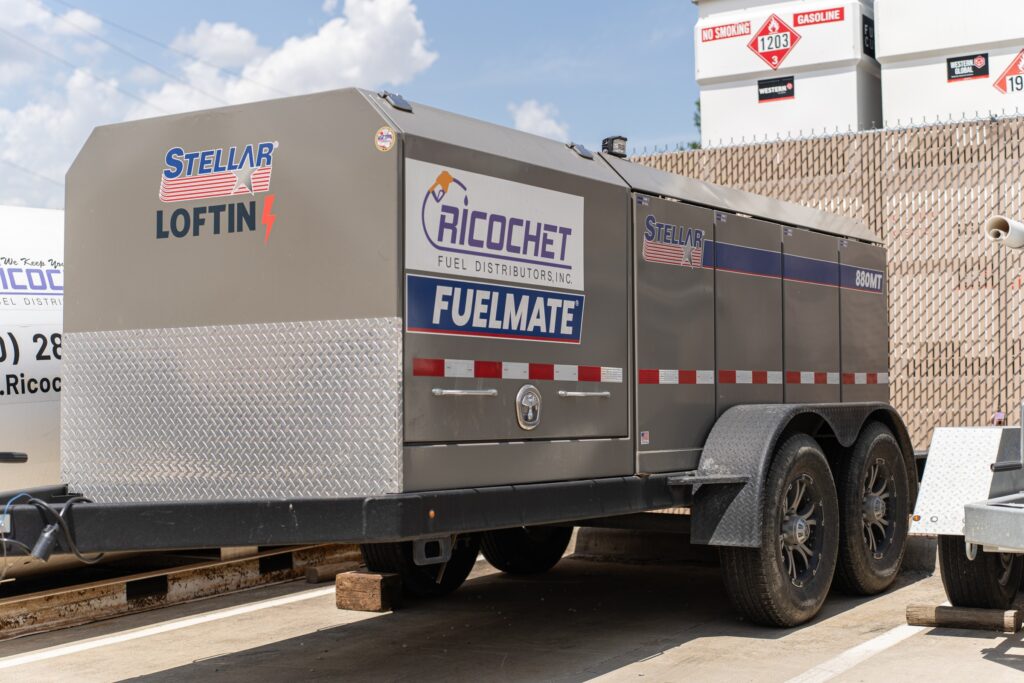
It is delivered directly to your work site via a reliable commercial fuel supply partner such as Ricochet Fuel Distributors Inc., which always delivers high-quality fuel without compromising on necessary safety standards. Plus, for businesses fueling multiple assets on a daily basis, this model effectively supports reasonable pricing, scalable growth, and better oversight – top advantages of bulk fuel for heavy fuel-dependent businesses.
When Should a Business Switch to Bulk Fuel?
Here are a few key indicators for switching to bulk fuel:
1. Fuel Consumption Is Increasing Month Over Month
Rising fuel volume is often considered one of the simplest yet clearest signs for bulk fueling. Thus, if your business also purchases hundreds or even thousands of gallons monthly without a break, then switching to bulk fuel is the ultimate solution. Moreover, bulk pricing typically decreases per-gallon costs and eventually helps create immediate fuel cost savings over time.
2. Fueling Time Is Slowing Down Operations
Retail fueling needs both vehicles as well as operators to leave job sites or routes. However, over a period of time, it results in lost labor hours, delayed timelines, and even operational inefficiencies in severe cases. Nonetheless, bulk fuel significantly eliminates these issues by bringing fuel directly to where and when it’s needed.
Additionally, discover how bulk fuel delivery benefits your business to save yourself from the hassles of waiting in long lines at refueling stations.
3. Fuel Costs Are Too Unpredictable
Retail pricing unpredictability often makes budgeting a bit difficult. That’s why bulk fuel enables businesses to plan purchases strategically, making overall fuel purchasing strategies more controlled yet data-driven – the best way of fuel cost savings for businesses.
Check out 11 ways to reduce bulk fuel costs while ensuring the smooth running of operations.
Benefits of Bulk Fuel for Commercial Operations
Common benefits of bulk fuel usually include:
1.On-Site Fuel Storage Enhances Control
With strictly compliant on-site fuel storage from a trusted partner, businesses receive:
- Immediate access to fuel
- Minimal downtime
- Unmatched emergency readiness
- Efficient scheduling flexibility
Furthermore, these benefits are valuable for construction sites, farms, and even transportation hubs.
2. Lower Costs Through Smarter Purchasing
A well-detailed bulk fuel cost comparison, retail vs. bulk, seamlessly ensures significant savings beyond price per gallon. Plus, bulk fuel also minimizes travel expenses and labor costs. along with unauthorized fuel usage. Additionally, explore how a fuel delivery cost-saving solution is considered a win-win deal for businesses.
3. Improved Business Fuel Management
Bulk fuel systems effectively support tracking, reporting, and usage monitoring without overlooking accuracy to allow leaders to optimize overall fuel consumption while minimizing waste over time.
Conclusion
Choosing between bulk fuel and retail fuel is often considered a strategic business decision. Therefore, companies that actively analyze when a business should switch to bulk fuel usually get better control over fuel costs, productivity, and even operational resilience, too.
Moreover, by incorporating smarter fuel purchasing strategies for businesses, businesses can easily position themselves for scalable growth while minimizing long-term fuel expenses over time.
Are you ready to simplify your fuel management? Stop looking any further and partner with Ricochet Fuel Distributors, Inc. now to receive high-quality, on-time bulk fuel delivery at your site!
FAQ’s
1. When should a business switch to bulk fuel?
A business should switch to bulk fuel whenever higher fuel usage becomes frequent, as retail refueling might result in unexpected downtime or uncontrolled fuel costs.
2. Is bulk fuel cheaper than retail fuel for businesses?
Yes, a bulk fuel cost comparison, retail vs. bulk, usually shows lower per-gallon costs along with lesser operational costs.
3. Does on-site fuel storage increase safety risks?
No, when installed correctly and maintained by experienced professionals, on-site fuel storage seamlessly boosts both safety as well as efficiency over time.
4. Can small businesses benefit from bulk fuel?
Yes, even small business fleets experience benefits when fuel usage is consistent without any delays.
A city runs on routine. Bins collected on time, roads cleared before traffic builds, and crews dispatched without delay. None of that happens if…
Fuel procurement rarely starts as a strategic discussion. It begins with what is practical. A few vehicles are issued fuel cards. Drivers refuel at…